I manage purchasing for a 300-person facilities company. That means roughly $1.4 million in annual orders, 20 vendors, and 60 to 80 purchase orders to process every year. I've been in this seat since 2020. I report to both operations and finance, so my job is to keep projects on schedule without creating cost surprises.
So here's my position: a quote that lists everything upfront is worth more than a low number that gets explained away later. I'd rather approve a higher first bid with line items I can verify than sign off on a price that “forgot” shipping, mounting hardware, or the driver configuration.
The hidden-cost lesson I won't repeat
Back in 2021, I approved a purchase order for 40 LED flood lights and 12 wall lights. The per-unit price was about 18% below what we'd been paying our incumbent supplier. The quote came in, the purchase order went out, and I thought I'd done my job.
Seven days later, the invoice told a different story. There were separate charges for mounting arms, a custom driver setting, liftgate delivery, and a “programming fee” for the photo controls. The final total was 23% higher than the quote. When I pushed back, the vendor said those items were never included. That was true. They just hadn't been mentioned.
Looking back, I should have asked for a line-item breakdown before approving the PO. At the time, the per-unit price looked like enough. Finance rejected part of the expense, and I got a polite but pointed question: Did you check what was included? I hadn't. Now I do.
When I ask for a quote, I ask what's not included before I ask what is. The vendor who lists all fees upfront—even if the total looks higher—usually costs less in the end.
Specs matter more than the catalog photo
The next thing I look at isn't the fixture. It's the documentation. Most buyers focus on wattage and lumens, and completely miss the data that actually predicts performance.
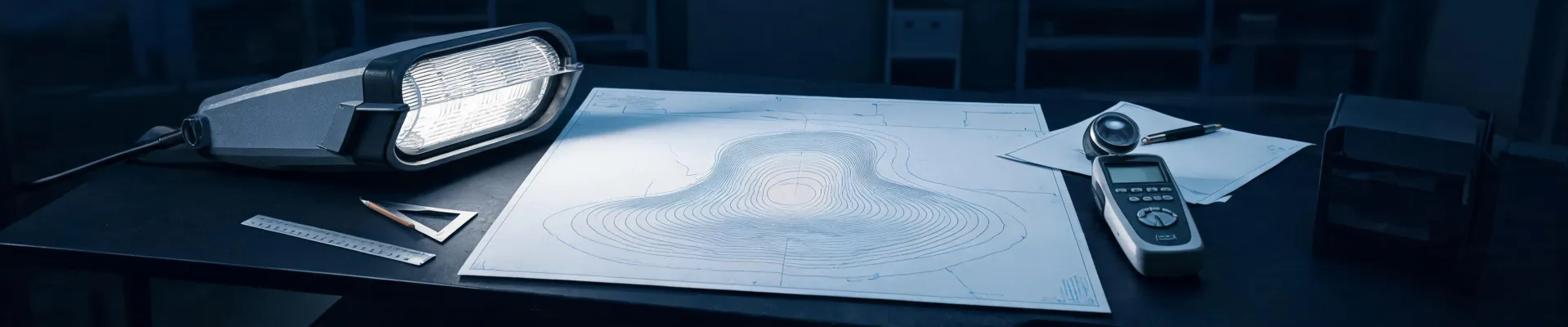
For outdoor lighting, that means IES photometric files, driver information, thermal data, IP ratings, and lumen maintenance reports. I ask for LM-80 data and TM-21 projections because they tell me what the LED will do after 50,000 hours—not just what the marketing sheet claims. I also check whether the fixture is listed to UL 1598 or an equivalent standard for our region.
Schreder lighting entered my radar during a 2024 street lighting sourcing project. I requested the same documentation from every manufacturer on the list. Schreder outdoor lighting had those files organized in the catalog and ready to download. I didn't need to email three people or wait four days. The question of how to evaluate wall light manufacturers started to feel simpler: start with the data, not the discount.
The strongest signal is an honest “I don't know”
Here's the counterintuitive part. The most reliable signal I get from a vendor isn't how fast they answer a technical question. It's how they handle a question they can't answer.
Earlier this year, I asked a flood light distributor about surge protection on one of their LED flood light models. The rep said: “Our fixtures are IP66, you're fine.” That doesn't answer the question. IP66, per IEC 60529, tells me something about water and dust ingress. It tells me nothing about surge immunity. But the statement sounded confident.
Another vendor paused and said: “I don't know the surge rating on that model off the top of my head. Let me check with engineering and get back to you.” They did, within a day, with the spec and a note about the test standard. That answer meant more to me than the brochure.
Real talk: I don't expect salespeople to memorize every detail. I expect them to know the difference between a fact and a guess. If a vendor can't say “I don't know” out loud, I can't trust them to flag a compliance problem later.
“Transparent” can look more expensive
I know the objection. A quote that includes every fee can look 10% higher than a bare-bones number. And there are situations where the lowest first cost truly matters. If you're buying for a single project with a fixed grant, maybe the cheapest quote is the only one that fits.
But here's what I see in repeat purchasing. Comparing final PO totals—not initial quote totals—the transparent vendors usually weren't the expensive ones. The vendors who hide fees just move the cost to a line item that shows up later. I can only speak to a mid-size company with predictable buying cycles. If you're a one-off buyer, the calculus might be different.
What I'd ask before evaluating wall light manufacturers
If someone asked me how to evaluate wall light manufacturers tomorrow, I'd start with the same three questions. Not “what's your best price?” but “what's included in that price, and can I see the photometric file?”
Three things: the IES file, the driver and thermal data, and the full landed cost. In that order. The catalog aesthetics come later.
Any flood light distributor can send a cut sheet. The ones that send a complete, verifiable package are the ones that understand how buying decisions actually get made. Distributors and OEM buyers face the same issue at a bigger scale: a manufacturer that hides compatibility details just moves the risk down the chain.
I'm not saying Schreder is the only outdoor lighting manufacturer that prices transparently or shares documentation. That would be a silly claim. I'm saying Schreder passed the test I now run on outdoor lighting vendors: complete quote, complete specs, and a direct answer when they don't know something.
The low quote is just a number. A transparent quote is a promise you can audit. In my line of work, I'll take the auditable promise every time.

Clara Whitmore is a lighting photometry and LED source analyst specializing in bulbs, tubes, strips, panels, and integrated luminaires. She interprets IES LM-79 measurements and TM-30 color rendition data through luminous flux, efficacy, intensity distribution, CCT, chromaticity, fidelity, and gamut metrics. She writes evidence-led comparisons for specifiers selecting source formats and luminaires for commercial interiors, industrial spaces, or horticultural systems where measured optical and color performance matter.