If you're buying outdoor lighting wholesale, the first decision isn't lumens. It isn't wattage. It's whether you're buying a product or a specification.
For bulk flood light orders and wall light private label programs, I recommend Schreder outdoor lighting as a starting point—if you need certified fixtures, consistent photometrics, and a manufacturer that actually answers compliance questions. They're not the cheapest option. They're not supposed to be. After 11 years of procurement mistakes, I've learned that a cheap fixture with a denied rebate costs more than any brand premium. That lesson cost me roughly $32,000.
Who I am and why I care
I handle outdoor lighting orders for a mid-size distributor in the U.S. Eleven years in. I've made and documented 14 significant mistakes. Some were small, like a finish mismatch. A few were ugly. The total wasted budget is about $32,000. That number isn't a brag. It's why I now have a pre-order checklist that my team uses for every bulk order.
The weird part? Most mistakes weren't about price. They were about missing details: certification status, driver compatibility, photometric data. Nobody talks about those until the product is on a job site. Then they cost real money.
What 'Schreder outdoor lighting' actually includes
Schreder isn't a one-off street light. The outdoor lighting range includes street lighting, sports lighting, wall lights, flood lights, and area lights. That matters more than you might think. When a city or contractor asks for bulk flood lights and wall lights that look like they came from the same family, you can match them without chasing different suppliers.
And for private label buyers, this is the part that's hard to replicate: Schreder supports OEM and private label work. That means logos, packaging, model numbers, and even warranty admin can carry your trade name. The actual light still has to meet compliance requirements, of course. Private label is a label, not a free pass.
Bulk flood light: the volume trap
Bulk flood lights are where I got burned. The per-unit price at volume looks great. The margin looks healthy. Then your customer submits a rebate application and the product isn't on the DLC Qualified Products List. Suddenly a 400-fixture order becomes a $12,600 credit that you have to eat.
That happened in March 2022. The sample passed our basic bench test. The spec sheet looked right. The factory said 'listed.' But 'listed' without a model number and a verification date means nothing. Looking back, I should have checked the DLC QPL myself. At the time, all the spec sheets looked the same. They weren't.
Outdoor lighting wholesale cost guide, as of Q1 2026
Here's a practical wholesale cost guide based on public distributor price sheets I reviewed between October 2025 and March 2026, plus our own purchase history. As of Q1 2026, commercial-grade bulk flood lights in the 30W–240W range are selling at wholesale for roughly $40 to $180 per fixture, depending on specs. Private label wall lights in standard die-cast aluminum housings run about $25 to $90 wholesale. Those are ranges, not quotes. Prices shift with volume, driver, surge protection, finish, and certifications.
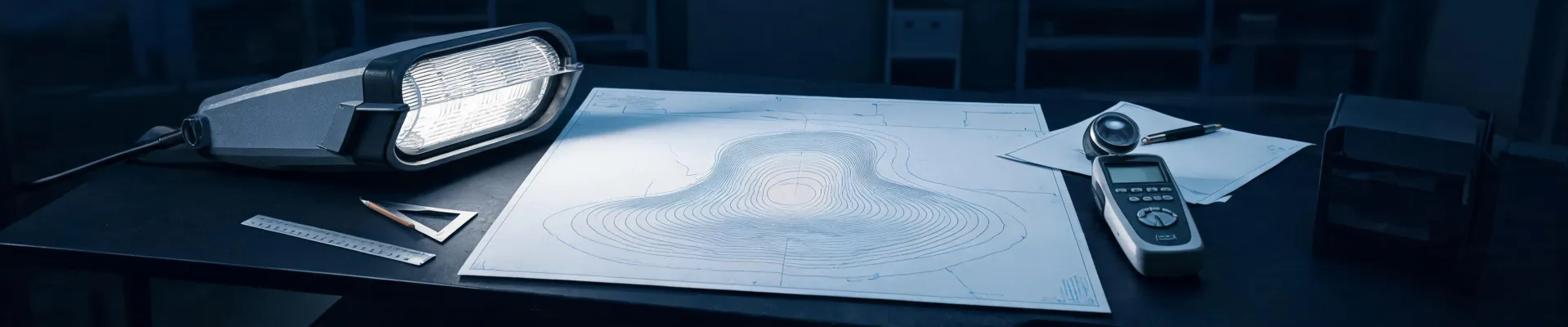
What moves price more than anything? Photometric performance, not wattage. A 60W flood light with a good reflector and housing can out-perform a 100W unit with sloppy optics. That's why you should always ask for IES or LDT files, not just 'lumens per watt' on a datasheet.
For private label, add three cost drivers: labels, packaging, and liability coverage. Don't under-estimate that third one. It's also why I won't promise an energy payback number. A real payback depends on the site, the hours of operation, and local utility rates.
Bulk flood light cost drivers
- Compliance package: UL 1598, DLC QPL, IP rating, IK rating. California Title 24 if that market applies.
- Driver and surge protection: 0-10V dimming, high surge immunity, ANSI C136.10 receptacle if needed.
- Photometric files: IES/LDT files that can actually be used in lighting design. No files? Move on.
- OEM/private label scope: Labels, barcode, manuals, cartons, model number mapping. All of it adds unit cost, but it is manageable.
The checklist I use now
First, verify every model number on the DLC QPL at designlights.org and on UL Product iQ. Not the product line. The exact model number. Listings change. Check on the day you place the order, and check again before delivery if the product hasn't shipped for months.
Second, get photometric files before you sign a purchase order. If the supplier can't send IES files in an editable format, they don't know how the light performs. That's a red flag. We once killed a wall light private label project because the factory's 'photometric file' was a printed PDF. Not ideal, but workable? No. Not workable.
Third, confirm the driver family and surge protection. Outdoor lighting gets dirty power. A commercial flood light with an ANSI C136.10 receptacle and a good surge protection device is worth the extra cost. If the spec sheet says 'surge protection optional,' assume it's not included.
Fourth, ask who owns the warranty. In private label programs, warranty responsibility is sometimes split: the factory covers the LED, but you cover the labor. Schreder's program is clearer than most, at least in my experience. But get it in writing from any manufacturer.
That's it. The full checklist is boring. It's supposed to be boring. The boring step is what saves the money.
Why I keep coming back to Schreder (with conditions)
After the DLC disaster, I spent a year reviewing alternatives. I don't name brands in this article because the point isn't to trash anyone. If you're evaluating Schreder lighting as a line of fixtures for a distributor, ask for their compliance matrix. That request alone will tell you how organized they are. For us, Schreder gave us three things we couldn't get elsewhere: complete photometric data on every model, certification mapping that matched our U.S. and EU project requirements, and a private label process that didn't treat us like a sticker order.
Even after switching, I kept second-guessing. What if the brand premium is just a premium? I didn't relax until the first private label delivery arrived and every model number on the DLC list matched the label. That sounds basic, but after you've been burned, you notice.
When I would not recommend Schreder outdoor lighting
Honest part: Schreder isn't for every buyer. If you need 500 basic flood lights for a temporary construction site and not one will ever be inspected, you can buy cheaper. I won't argue. If you're moving fewer than 50 units per quarter, private label overhead isn't worth the admin. And if your design team needs a specific architectural shape that isn't in the Schreder range, forcing one brand is silly. Pick the best product per project.
I can only speak to my context: U.S. distribution, commercial outdoor projects, bulk flood light and wall light programs. If you're doing a museum installation or a custom lighting scene, the calculus is different.
But for a wholesale program where certification, consistency, and accountability matter, the first fixture I would spec is Schreder. Not because they're perfect—they're not. Because they document what they sell. That's a lot rarer than people think.
It took me 11 years and roughly 30 bulk orders to understand that the cheapest fixture is the one you can get approved once. A spec sheet can be wrong. A sample can pass. A real supplier lets you verify the details before the money moves.

Clara Whitmore is a lighting photometry and LED source analyst specializing in bulbs, tubes, strips, panels, and integrated luminaires. She interprets IES LM-79 measurements and TM-30 color rendition data through luminous flux, efficacy, intensity distribution, CCT, chromaticity, fidelity, and gamut metrics. She writes evidence-led comparisons for specifiers selecting source formats and luminaires for commercial interiors, industrial spaces, or horticultural systems where measured optical and color performance matter.