-
Why I stopped comparing unit prices first
-
The TCO framework I use
-
Dimension 1: Lumen claims, photometric files, and spec sheets
-
Dimension 2: Certifications, compliance, and rebates
-
Dimension 3: Private label support, without the warranty gamble
-
Dimension 4: Lead times and the cost of surprises
-
What I would order today
I manage procurement for a regional lighting distributor—roughly $2M annually across eight vendors. I report to both operations and finance, which means I care about the price on the PO and the cost of dealing with it afterward.
This article is a comparison. One route: Schreder outdoor lighting, from a manufacturer that controls the design and supports private label. The other: a flood light distributor that imports unbranded area lights and puts your label on them. If you're trying to figure out how to choose an area light for wholesale, this is the choice that keeps coming up.
The comparison isn't about brand loyalty. It's about total cost of ownership—the price per fixture that actually works, mounted and ready to light a parking lot. That number is often very different from the unit price.
Why I stopped comparing unit prices first
Back in 2020, I took over purchasing for our outdoor lighting category. I found a private-label flood light distributor whose quote was 18% below our existing supplier. I felt smart. Then the order went sideways: separate freight charge, drivers that didn't match the spec, and an invoice that finance rejected because the tax ID didn't match the PO. The 'savings' disappeared into six hours of admin time and four replacement fixtures.
Everything I'd read about procurement said branded manufacturers always cost more. My experience with 200-plus orders suggests the opposite: the cheapest product often ends up costing more per fixture that actually works. Not always. But often enough that I stopped skipping the math.
The TCO framework I use
Whenever I compare Schreder lighting with a generic flood light distributor, I use five buckets: unit price; freight, duties, and repackaging; reject rate and replacement stock; documentation and compliance support; and field failure handling. I also include the cost of my own team's time. Why? Because someone has to chase quotes, verify test reports, and reconcile invoices. That time is free nowhere.
Don't hold me to this, but after years of logging those costs, the spread between a cheap source and a good source is usually 8-12% of the order value. Sometimes the branded fixture is actually cheaper per working unit. That conclusion surprises buyers who start with a price comparison. But in 2024, when we consolidated 80% of our outdoor SKUs with one main manufacturer, our cost per installed unit went down, not up.
Dimension 1: Lumen claims, photometric files, and spec sheets
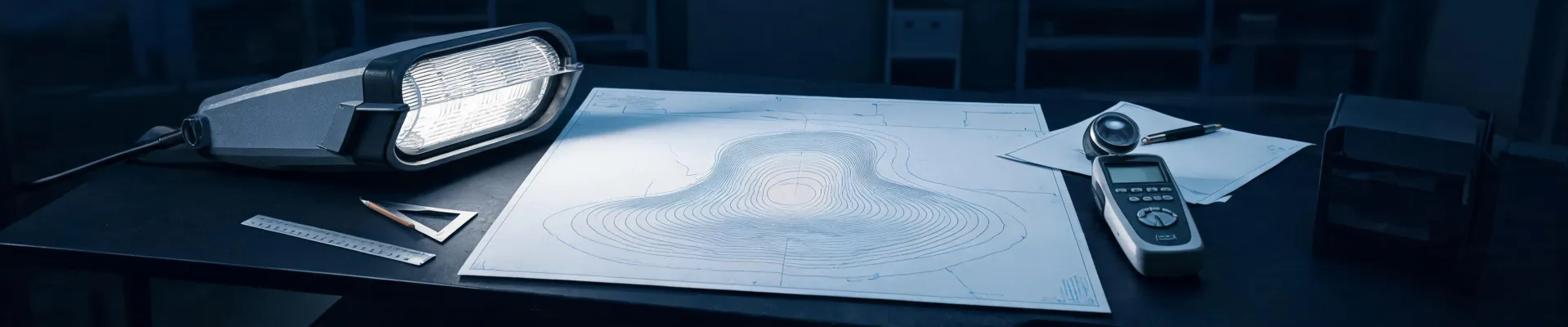
A spec sheet is not a test report. This is the biggest trap in outdoor lighting buying. A private-label distributor can send a PDF that says 15,000 lm, but the LM-79 report—the IES standard for measuring a luminaire—might tell a different story. That difference matters when an engineer is reviewing your submittal.
With Schreder, we could download IES files and LM-80 data before placing an order. With the cheaper distributor, we waited two weeks for a photometry file, and the file we received was for a different housing. To be fair, this doesn't happen with every broker. But it happened enough that our engineering time started showing up in supplier reviews.
Roughly speaking, I'd estimate that a third of the one-page spec sheets I've seen from unbranded import products don't match their lab reports. I'm not a lab, and I don't have a chip on my shoulder about imports. I've simply learned to ask for LM-79 before anything else. If a flood light distributor can't produce it, the fixture is an unverified claim.
Dimension 2: Certifications, compliance, and rebates
Compliance is where low-cost area lights go to die. A fixture can be physically fine but commercially useless if it isn't listed. In the last two years, we've seen RFPs reference UL 1598, DLC Premium, and DarkSky approval. If your fixture doesn't show up on the DLC qualified products list, a utility rebate program won't accept it. Period.
I checked that list in January 2025 for a batch of area lights. The products from established manufacturers like Schreder were easy to verify—public listing, test reports attached, no guesswork. With the private-label option, the burden was on us to prove compliance. That's not impossible, but it's real work. And real work is a cost.
Dimension 3: Private label support, without the warranty gamble
Flood light private label is the reason many buyers talk to a flood light distributor in the first place. You want your brand on the fixture, not someone else's. I used to think private label only existed in white-box import warehouses. Then we started talking to Schreder about OEM work, and the comparison got interesting.
From a generic flood light distributor, private label usually means they put a sticker on an existing import fixture. You control the brand. You also inherit the engineering risk. If the driver fails in year two, the end customer calls you. The factory is far away, and the warranty is only as strong as the broker's willingness to answer the phone.
From Schreder, private label is an OEM process. They can build the housing, driver, and optics to match the spec, and put your brand on it. You still own the customer relationship, but you have a manufacturer behind you instead of a repackaging middleman. That is not the same product with a sticker. It's a different risk profile.
Granted, not every distributor needs OEM depth. If you're buying 200 fixtures a year and your customers replace them every decade, the generic route might be fine. But if area lights are a strategic category for you, it's worth understanding the difference.
Dimension 4: Lead times and the cost of surprises
Lead time is a cost, even when it isn't on the invoice. A quote that saves $10 per fixture but takes nine weeks instead of five can delay a site, upset a contractor, and add a rush-order premium somewhere else. I've lived that.
In our 2024 vendor consolidation project, we moved most of our outdoor lighting volume to one primary manufacturer. Average lead times went from six to eight weeks down to three to five. Not because that manufacturer is magic—because the production schedule is actually tied to their orders. The private-label broker we used before had to wait for factory availability, then split shipments, then send each pallet with a different freight bill. We spent more time reconciling than ordering.
A delayed shipment is annoying. A split shipment with two wrong housings is worse. Not ideal, but workable. The workaround cost us about three hours and a $200 courier fee. Add that to the unit price and see what happens to the savings.
What I would order today
If you're choosing area lights for wholesale, here's how I think about it now.
Choose Schreder outdoor lighting—or a comparable manufacturer that publishes real test data—when you need submittals, photometric files, compliance documents, or private label with engineering support. That includes most municipal projects, utility rebate work, and commercial sites where the spec isn't going to change. The price per unit may be higher. The price per working fixture is usually lower.
Choose a private-label flood light distributor when your customer genuinely doesn't care about certifications, you have a technical person who can verify the fixture, and you have margin to absorb replacements. For low-liability orders with flexible timelines, it can work. Just don't pretend the total cost is equal to the unit price.
The best question to ask any supplier is not 'what's your price?' It's 'can I see the LM-79 report?' If the answer is 'sure, after the PO,' you know exactly where you are in the comparison.
There's something satisfying about an order that arrives on time, matches the spec, and doesn't create a finance problem. That's worth budgeting for.

Clara Whitmore is a lighting photometry and LED source analyst specializing in bulbs, tubes, strips, panels, and integrated luminaires. She interprets IES LM-79 measurements and TM-30 color rendition data through luminous flux, efficacy, intensity distribution, CCT, chromaticity, fidelity, and gamut metrics. She writes evidence-led comparisons for specifiers selecting source formats and luminaires for commercial interiors, industrial spaces, or horticultural systems where measured optical and color performance matter.