I've been managing procurement for a mid-sized electrical distributor for six years. Over that time, I've audited roughly $180,000 in outdoor lighting purchases—maybe $170,000, I'd have to check the spreadsheet—and I've compared quotes from more flood light manufacturers than I can count. So here's my position: unit price is the last thing I look at, not the first.
That sounds like a strange thing for a cost controller to say. But after 6 years of watching projects get derailed by cheap fixtures, I'm convinced that buying on unit price is the most expensive way to buy outdoor lighting. What I mean is, the invoice amount is a tiny part of what a luminaire actually costs over its life.
When someone asks me whether Schreder lighting is worth the premium, I ask which premium they're talking about. A fixture's real premium shows up later, in maintenance, compliance, and longevity. And those costs don't appear on a purchase order.
The rookie mistake that changed my approach
In my first year, I made the classic specification error: I assumed that 'equivalent' meant the same thing to every manufacturer. A vendor quoted a wall light for 18% less than the rest. It looked fine in the sample. We ordered 300 units. Eighteen months later, I was looking at a pile of failed drivers. That savings turned into a $600 redo, plus time spent arguing about who pays for replacement drivers. (Not that I got anywhere.)
What I do now: 10-year total cost
Now I compare Schreder outdoor lighting against other options using a spreadsheet. The unit price is there, but it's one row among many.
- Initial product cost and freight
- Installation labor if the fixture is heavy or awkward to mount
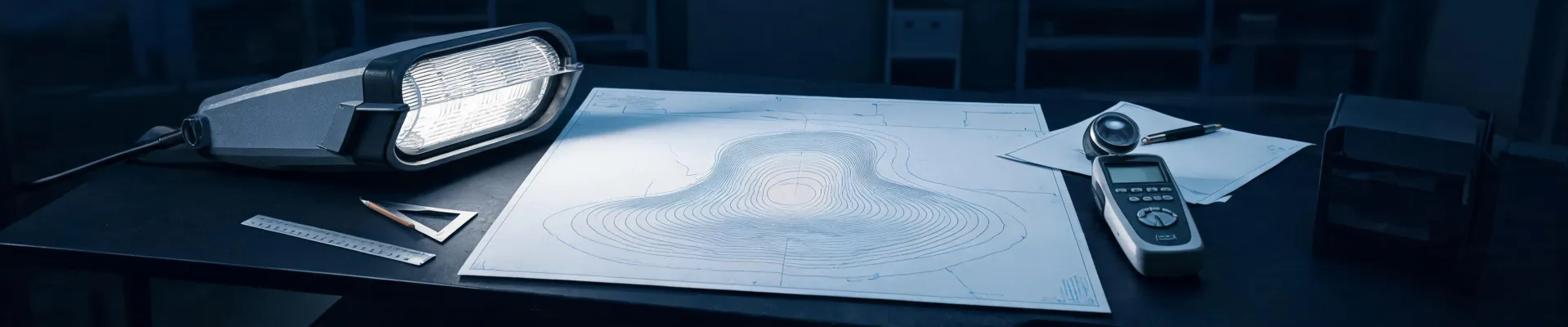
- Energy consumption based on actual photometric data, not catalog lumens
- Driver and LED module replacement intervals based on LM-80 and TM-21 projections
- Warranty claim handling that clearly shows who pays for time and shipping
- Utility rebate eligibility such as DLC listing
- Compliance documentation for municipal or sports projects
A flood light manufacturer can quote 10% lower, but if their IES files are incomplete or their driver curve doesn't match the project specs, that 10% disappears fast.
This sounds like a lot of work. It's not. Most reputable manufacturers provide this data if you ask. The ones that don't usually have a reason. When a supplier says 'we don't have photometric files prepared,' I hear 'we haven't tested this fixture properly.'
Spec compliance is not paperwork, it's protection
If you're buying sports lighting wholesale, you're probably buying for multiple fields with multiple stakeholders. Sports lighting has recommended practices—IES RP-6 is the one I use—that specify illuminance, uniformity, and glare control. If a manufacturer can't provide photometric files in standard formats, you're not saving time. You're inheriting risk.
Same for wall lights, area lights, and flood lights. I've seen a project rejected because the submitted fixture didn't have the required certification. The lowest bid suddenly required a reorder and an accelerated install schedule. The project manager wasn't interested in the excuse. Neither was the owner.
Don't mistake certification for performance. Certification tells you a fixture passed certain tests. Photometric files tell you how it performs in your project. You need both.
What a wall light distributor buying guide should include
A wall light distributor buying guide should not be a list of SKUs. It should include total cost, compliance documents, photometric files, and a realistic plan for warranty claims. If a supplier cannot show you LM-80 data and a TM-21 projection for L70 life, you're making decisions with blind spots.
The hidden cost nobody budgets: consistency
The number I almost never saw in the early years was consistency. For OEM and private label programs, finish consistency and driver settings are part of the product. A batch of Schreder lighting fixtures needs to match the approved sample, not just in performance but in appearance and installed behavior. If one production run has a different driver current or a slightly different extrusion finish, your inventory becomes a patchwork, and your customers notice.
I had to learn this the hard way. The numbers said go with a lower-priced supplier—the specs looked identical. My gut said something was off about their responsiveness during the sample phase. I ignored my gut because the spreadsheet was so clear. That was the one time my gut was right. The containers arrived with two different color temperatures mixed in one batch. (Surprise, surprise.)
Consistency also matters for warranty logistics. If every batch has a slightly different driver, your spare parts inventory becomes a guessing game. That's the kind of cost that never shows up on a quote but always shows up on a P&L.
There was also the time I had two hours to decide on a large quote because the bid deadline couldn't move. Normally I'd compare three vendors. That day, I went with our usual supplier on trust. It turned out fine, but it made me realize that emergency decisions on incomplete information are exactly how budgets explode.
What about the customer who only wants cheap?
I hear that from sales teams all the time. Honestly, I get it. When you're a distributor, your customer has to justify the purchase to someone above them. Price is the easy comparison. But here's the thing: when a cheap fixture fails, your customer doesn't call the manufacturer. They call you.
That's why I'd rather spend 10 minutes explaining total cost and compliance than deal with a warranty claim at a project site later. An informed customer asks better questions and makes faster decisions. The customers you actually want are the ones who understand that 'cheap' and 'economical' are not the same word.
For the same reason, I don't ask suppliers for a price list. I ask for a proposal that includes photometric data, installation notes, and warranty terms. If the proposal is only a column of prices, it's incomplete.
Bottom line
I still buy on price. I just include every price—the upfront price, the energy price, the compliance price, the warranty price, and the redo price. If you're evaluating Schreder outdoor lighting or any other manufacturer, ask for the information that makes those numbers visible. If they can't provide it, that's a red flag.
I have a sticky note above my desk:
The cheapest fixture is the one that's still doing its job in year ten—not the one with the lowest invoice amount.
So, if you're putting together a sports lighting wholesale order, a wall light distributor buying guide, or a flood light manufacturer comparison, don't start with the price list. Start with the data. That's where the real cost lives.

Clara Whitmore is a lighting photometry and LED source analyst specializing in bulbs, tubes, strips, panels, and integrated luminaires. She interprets IES LM-79 measurements and TM-30 color rendition data through luminous flux, efficacy, intensity distribution, CCT, chromaticity, fidelity, and gamut metrics. She writes evidence-led comparisons for specifiers selecting source formats and luminaires for commercial interiors, industrial spaces, or horticultural systems where measured optical and color performance matter.