The Short Answer: Compliance First, Price Last
If you’re sourcing bulk outdoor lighting—especially area lights for a wholesale or distributor order—the safest sequence is: verify compliance and photometric data, confirm the mechanical and electrical fit, check the lead time on that exact configuration, then talk price. The cheapest fixture is the one that doesn’t need to be re-ordered overnight.
I coordinate rush orders for outdoor lighting projects. I’ve handled 100+ rush orders in the last three years, including same-day turnarounds for distributors and contractors who had already promised a delivery date. The pattern is almost always the same: the delay wasn’t caused by manufacturing speed. It was caused by a spec mismatch that no one caught until the truck was supposed to load.
Why I’m Not the Cheapest Voice You’ll Hear
I’m not a lighting designer. I don’t pretend to be. My job is to find out whether a fixture can ship in time, whether the paperwork is clean, and what breaks first when a project is already behind schedule. That’s a narrow job. But it’s saved a lot of wholesale orders from becoming emergency re-orders.
In my role, I ask three questions before anyone talks about unit price:
- Does the fixture have current IES LM-79 photometric and electrical reports for the exact model and CCT?
- Are the IP and IK ratings, voltage, controls, and mounting compatible with the project—not just similar to it?
- Is the lead time quoted for the configured SKU, not the base model?
If a supplier can’t answer those in writing, the price is not a price. It’s a placeholder.
The Misconception: ‘Higher Price Means Better Quality’
People think a higher price causes better quality. Actually, it often works the other way: vendors who consistently deliver verified quality and reliable lead times can charge more. The causation runs the other direction. That matters in bulk outdoor lighting because the cheapest quote often hides the cost of expediting, re-testing, or replacing fixtures after installation.
In March 2024, a distributor called at 4:30 p.m. needing 180 area lights for a parking lot opening 36 hours later. I went back and forth between a lower-cost area light and a higher-cost fixture. The lower-cost model had a similar lumen output, but the LM-79 file was for a different driver. The higher-cost model had the exact control compatibility the client needed. I chose the higher-cost one because the project had a penalty clause. The client’s alternative was delaying the parking lot opening by two weeks. We paid $800 extra in rush freight, but saved the $12,000 project. That decision was not about brand loyalty. It was about avoiding a schedule hit.
Does that mean cheap area lights are always bad? No. It means cheap is only cheap when the specification is simple and the risk is low. For a standard 4000K area light with no controls and a forgiving schedule, a lower-cost option can be fine. For a street lighting wholesale order with photocells, dimming, and a utility rebate, the cheaper unit can become the expensive one.
How to Choose Area Lights for Wholesale: A Practical Filter
When a distributor sends me a bulk outdoor lighting RFQ, I run a filter before quoting. It’s not glamorous, but it prevents most rush orders.
1. Lock the compliance path first
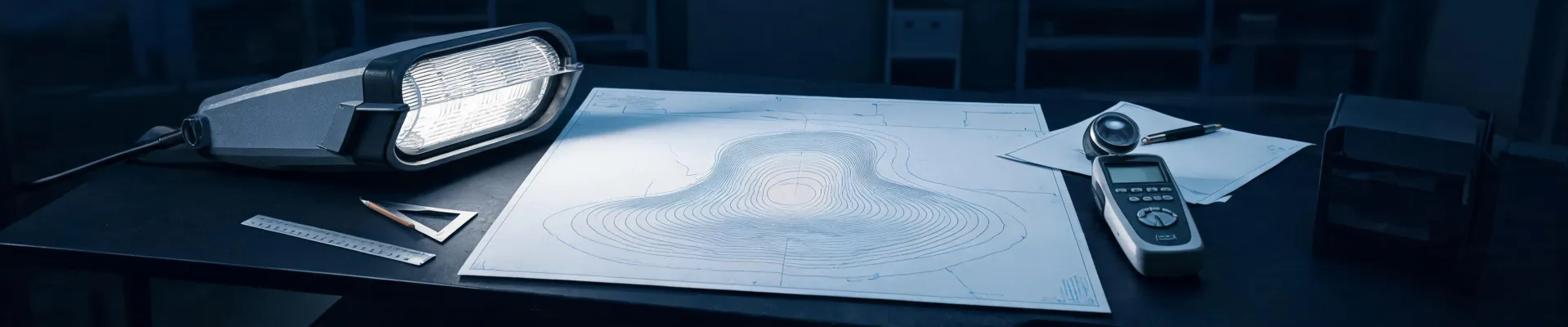
If the project is publicly funded, check Buy American Act or TAA requirements before you fall in love with a fixture. If the utility rebate depends on DLC listing, confirm the exact model is listed—not just the family. If the spec calls for IES RP-8 roadway criteria, get the photometric file and verify spacing, mounting height, and light loss factors. These are binary checks. A fixture either has the documentation or it doesn’t.
Reference: IES LM-79 covers photometric and electrical measurements for solid-state lighting products. IES LM-80 and TM-21 are used to estimate lumen maintenance; they do not guarantee a lifespan in every application.
That distinction matters when a tender asks for L70 or L90 data.
2. Match the mechanical and electrical envelope
Area lights fail at the installation stage for boring reasons: mounting arm diameter, bolt pattern, junction box size, voltage, surge protection, and control wiring. I’ve seen a wholesale order of 180 area lights held up because the mounting bracket was designed for a 2⅜-inch tenon and the poles used a 3-inch tenon. The fixture was fine. The interface wasn’t.
Check IP and IK ratings against the actual environment. IP66 is common for outdoor fixtures, but it doesn’t mean the fixture can be submerged or installed in a chemical plant without review. IK08 gives moderate impact resistance; it’s not a promise against hail or vandalism in every location. These ratings are starting points, not blanket approvals.
3. Confirm lead time on the configured SKU
This is where most rush orders are born. A sales sheet says four-week lead time (unfortunately, that was for the base model). The actual configured SKU—custom CCT, photocell, 0-10V dimming, specific finish—may be eight weeks. Ask for the lead time in writing, with the configuration attached. If the distributor is promising a date to their customer, the clock starts at purchase order, not at quote requested.
Time pressure decisions are different. With 48 hours to decide on a substitution, I don’t run a full comparative test. I check three things: compliance file, voltage and control compatibility, and whether the factory can confirm the ship date. If one of those is missing, the answer is no. In hindsight, I should have built more buffer into the original schedule. But with a contractor waiting on a crane crew, you make the call with the information you have. Our company policy now requires a 48-hour buffer on configured SKUs because of what happened in 2023.
4. Treat price as the last filter, not the first
Unit price matters. But in bulk outdoor lighting, the total cost includes freight, expediting, potential re-stocking, and the labor to replace a fixture that failed a site inspection. A 6% lower unit price on a 200-piece area light order can disappear with one emergency truck shipment.
When you compare street lighting wholesale quotes, ask for a line-item breakdown: fixture, mounting, controls, freight, and lead time. If a vendor won’t break it out, you can’t compare it properly.
Where ‘One-Stop’ Becomes a Warning Sign
I’d rather work with a specialist who knows their limits than a generalist who overpromises. The vendor who said, ‘This isn’t our strength—here’s who does it better,’ earned my trust for everything else. In outdoor lighting, no single supplier is the best at every product category, every control protocol, and every compliance regime.
If a distributor asks for Schreder outdoor lighting, street lighting, sports lighting, wall lights, flood lights, and area lights in one order, the right answer may not be yes, we do all of it. The right answer may be: we can handle these three categories; for the other two, here’s a realistic timeline and a referral. That’s not a weakness. It’s how you avoid a rush order later. A supplier who claims to be excellent at everything is often just excellent at saying yes.
That said, for OEM and private label buyers, the calculation is different. If you need consistent technical documentation, private label packaging, and a single point of contact across a narrow outdoor lighting range, a focused manufacturer can be faster than a broad-line distributor. The key is to define the boundary clearly: what’s in scope, what’s not, and who owns the compliance file.
Boundary Conditions: When This Advice Doesn’t Apply
This compliance-first approach works best for projects with a fixed spec, a real deadline, and consequences for missing it. It’s less useful when you’re exploring a new market and need samples to test demand. In that case, speed of sampling may matter more than a full compliance review. Just don’t confuse a sample order with a production order.
It also assumes you have access to the spec and the end customer’s requirements. If you’re buying bulk outdoor lighting on a purely speculative basis for a warehouse, you can simplify. Standard voltage, standard mounting, no controls—save the deep dive for the orders that carry penalties.
And if you’re comparing Schreder lighting against another brand, don’t stop at the logo. Compare the exact photometric file, the driver, the control compatibility, the warranty terms, and the lead time for the configured SKU. If I remember correctly, one of the worst rush orders we handled came from a buyer who assumed two area lights were interchangeable because both were ‘4000K, 100W.’ The lumen distribution was completely different. The project needed a Type III optic. The substitute was a Type V. The fixtures were installed before anyone caught it. That mistake cost more than the fixtures.
So: choose the area light for wholesale by starting with compliance and photometrics, then mechanical fit, then lead time on the configured SKU. Price comes after. That’s been my experience with penalty-clause projects—though for standard stock orders, the calculus is different. It’s not the most exciting buying guide. But it’s the one that keeps a wholesale order from turning into an emergency.

Keiko Mori is a luminaire safety and quality analyst specializing in general fixtures, emergency lights, exit signs, and supplier verification. She applies IEC 60598-1 and IEC 60598-2-22 to review dielectric strength, protective earthing, temperature rise, wiring, markings, battery duration, changeover operation, and test records. She writes structured compliance guides for quality and sourcing teams separating applicable construction evidence, declared configurations, installation conditions, and maintenance obligations from broad safety claims or incomplete documentation.