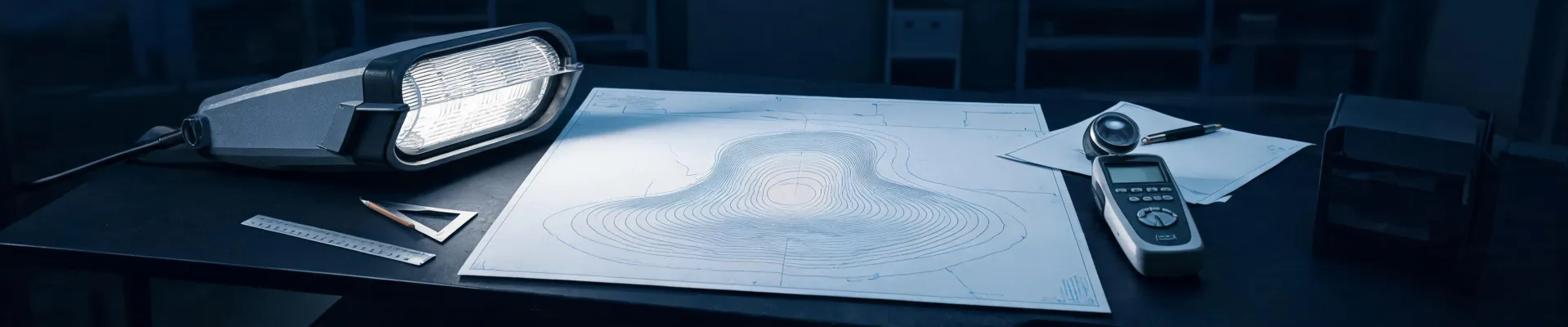
Tuesday, March 12, 2024. 11:47 a.m. I was halfway through a coffee when the phone rang. A project manager for a regional freight company was on the line, and he didn't bother with hello. 'Can you get me 240 flood lights by Sunday? The original supplier just told us they can't ship until next month.'
This wasn't a typical request. The site was a new distribution hub, and the flood lights were supposed to cover the truck yard and the walkway between the dock doors. If the yard wasn't lit to the engineer's spec by Monday, the client visit would be canceled, and the general contractor would hit the project manager with a penalty. That's the kind of call you don't want to get.
I've been coordinating outdoor lighting orders for a distributor for seven years. We've handled maybe 200 rush jobs — actually, probably closer to 180, I'd have to check our system. But this one had a special kind of pressure: every decision counted, and there was no time to fix a mistake.
First Question: Who Actually Has Bulk Flood Lights in Stock?
My first instinct was to call Schreder. We already used Schreder lighting for street lighting and area lighting projects, so I knew the brand. But a flood light? In bulk? I honestly wasn't sure they made those. I had a mental lock: Schreder = street lighting. That assumption almost made me waste a day.
I sent our Schreder rep a quick email with the spec: 150W LED flood lights, 4000K, IP66, 10kV surge protection, UL listed, with photometric files. Oh, and a yoke mount that had to fit the existing brackets on 17 poles. 'Need 240 units by Friday,' I wrote. 'Is this something you can help with?'
While I waited, I did what any experienced buyer would do: I got a second quote. A discount vendor came back $1,200 lower for 'the same thing.' Same wattage, same IP rating, same color temp. They said yes to everything. 'No problem, standard yoke, we've got stock.' They even promised two-day delivery, which sounded too good to be true. It was.
I'll be honest — that $1,200 was tempting. My boss was already asking why we couldn't just buy the cheaper lights. And on paper, the two fixtures looked identical. So I made the call: we placed the order with the discount vendor.
The Twist: 'Standard' Meant Different Things
Here's where the real lesson starts. After ordering, I asked the vendor for photometric files so our engineer could run a quick lighting layout. 'We don't have those,' they said. 'It's a flood light. You aim it until it looks right.'
That should have been a red flag. But I didn't stop. I asked for the DLC listing and UL report. 'It's listed, trust us,' they said. I should have hung up right there.
Then I asked for the exact mounting hole pattern because the existing poles were drilled a specific way. 'It's standard,' the vendor said. 'Will it fit a 130mm x 130mm bolt pattern?' I asked. 'Yeah, it's standard.'
On Wednesday morning, when the order was already in transit, our engineer looked at the spec sheet: the fixture's mounting pattern was 120mm x 120mm. The pole brackets were 130mm x 130mm. Ten millimeters might not sound like much, but it might as well have been a foot. There was no way to attach the fixtures without custom adapters, and custom adapters take a week.
We both said 'standard' but meant completely different things. What I meant was 'matches our brackets.' What they heard was 'we'll make it work.' Result: a $540 restocking fee, 36 hours lost, and zero flood lights.
How Schreder Saved the Order
With the original deadline now impossible by normal means, I called our Schreder rep back. This time, they answered with specifics: 'We cast bracket options for 130mm and 140mm patterns. Send us the pole drawing and we'll confirm.' They also sent photometric files, DLC listing documents, and test reports for every fixture. They didn't just say 'it's fine' — they verified.
And here's the part I respect most: they told me what they couldn't do. They couldn't match the discount vendor's price on that fixture. No apology, no fake discount. 'Our price is higher because you're paying for verified performance and support,' they said. 'If you don't need that, buy elsewhere.' That might sound counterintuitive for a sales rep to say, but to me, it was a sign of competence. I'd rather work with a specialist who knows their limits than a generalist who overpromises.
In the end, Schreder had 240 units in stock at a regional warehouse. We paid an extra $1,450 for expedited freight, but the lights arrived Thursday afternoon. Our crew installed them Friday and Saturday, the engineer signed off Sunday, and the site opened Monday morning as scheduled.
We saved $1,200 on the initial quote. That detour cost us $540 in restocking fees, $1,450 in expedited freight, and about $2,000 in overtime labor. Net loss: roughly $2,790 — and a few gray hairs. The phrase 'penny wise, pound foolish' exists for a reason.
What to Look for in a Flood Light Supplier
If you're doing bulk flood light sourcing, price is not the first question. The first question is: can this supplier prove what they're selling?
- Photometric files: If a supplier can't provide IES or LDT files, they're not serious. Lighting layouts need real photometric data, not guesses. According to DLC's current technical requirements (designlights.org), qualified products must pass LM-79 and LM-80 testing. Ask for the reports before you order, not after.
- Safety and compliance: UL listing or ETL listing isn't optional on commercial projects. Check the cert. Also verify IP ratings per IEC 60529 and surge protection ratings per IEEE C62.41.2. The cheapest fixture is no bargain if it fails an inspection.
- Mounting compatibility: Don't say 'standard' — send drawings. Ask for exact dimensions, bolt patterns, and options. A supplier who asks for your pole specs is a supplier who knows what they're doing.
- Lead times and stock: In an emergency, the only thing worse than no stock is uncertain stock. Ask for the warehouse location and the shipping date in writing. A vague 'we can get it there' is not an answer.
- Warranty and support: What happens a year later when a driver cracks a housing? Is there a local rep who will answer email? Will they provide a warranty statement in writing? These questions matter more on a bulk buy than on a sample.
- Boundaries: Beware of a supplier who says yes to everything. Good suppliers know what they can't do and will tell you. That honesty is worth more than a low quote.
I also learned something about Schreder outdoor lighting as a category. It's broader than I assumed. They do street lighting, sports lighting, wall lights, flood lights, and area lights — plus OEM/private label support if you're trying to build your own brand. But more importantly, they have the engineering documentation and people who know how to use it. That's the kind of supplier you can bet a deadline on.
The Rule We Now Use
Our company policy now requires a 48-hour buffer on any rush order, because of what happened in March 2024. And before any bulk flood light order goes through, we ask for three things: photometric files, mounting drawings, and a compliance sheet. If a vendor can't provide all three, they're not on the list.
We also changed how we talk to vendors. I don't just ask 'is it compatible?' anymore. I send them the exact bracket drawing and say 'does this fit?' If they can't answer yes or no with confidence, I move on. That two-word change might sound small, but it would have saved us from the whole detour.
Now, I'm not going to claim this applies to every situation. If you're sourcing a single flood light for a residential backyard, this checklist is overkill. And if you're working with a local electrical contractor who handles installation, they may have their own standards. The context matters. But for commercial bulk flood light sourcing with a hard deadline? I'll take a supplier who gives me verified specs over a cheaper one every time.
That's not because I love spending more money. It's because I've lived through the alternative up close. You don't want to be the person standing in an empty truck yard on a Sunday afternoon, with a deadline shrinking and a stack of non-compliant flood lights on the ground. That phone call I got at 11:47 a.m. could have ended very differently if Schreder hadn't been able to step in. Now, I make a point of knowing exactly what they can do — before I need it.

Clara Whitmore is a lighting photometry and LED source analyst specializing in bulbs, tubes, strips, panels, and integrated luminaires. She interprets IES LM-79 measurements and TM-30 color rendition data through luminous flux, efficacy, intensity distribution, CCT, chromaticity, fidelity, and gamut metrics. She writes evidence-led comparisons for specifiers selecting source formats and luminaires for commercial interiors, industrial spaces, or horticultural systems where measured optical and color performance matter.