The short answer
If you're buying outdoor lighting for a facility or resale, ask for three files before you look at the price sheet: an LM-79 test report, LM-80/TM-21 data, and an IP/IK certification sheet. A flood light supplier that can't produce those documents is a reseller with a spec sheet, not a manufacturing partner you can build a wholesale program around. That's the same filter I use when I compare Schreder outdoor lighting with other options.
For sports lighting manufacturers, the evaluation is more specific: ask for photometric files (IES), glare and spill-light data, driver architecture, wind-load ratings, and a clear OEM/private label path. Schreder lighting may be a familiar name, but the brand alone doesn't answer the procurement questions. The paperwork does.
Why I'm qualified to have an opinion
I'm an office administrator for a 140-person company. I manage facilities procurement—roughly $220,000 annually across about 12 vendors. I report to operations and finance. I started handling exterior lighting orders in 2021 after we replaced 60 fixtures across two warehouses and a parking lot.
We've run maybe 90 lighting RFQs since then. Maybe 75, I'd have to check the system. I don't have hard data on industry-wide defect rates, but based on our orders, my sense is that first-article issues affect 10–15% of new suppliers. That number is anecdotal, not a benchmark.
In 2023, I went back and forth between a known brand like Schreder and a lower-cost flood light wholesale supplier for two weeks. The known brand offered documentation and channel support; the new supplier offered faster MOQ flexibility. Ultimately chose the documented option because the project had a compliance review. I'd rather spend 10 minutes checking certificates than explain a failed inspection later.
How to evaluate sports lighting manufacturers
Sports lighting is not just brighter flood lights. It's optics, glare control, and consistency. Here's what I ask for now.
1. Photometric and optical data
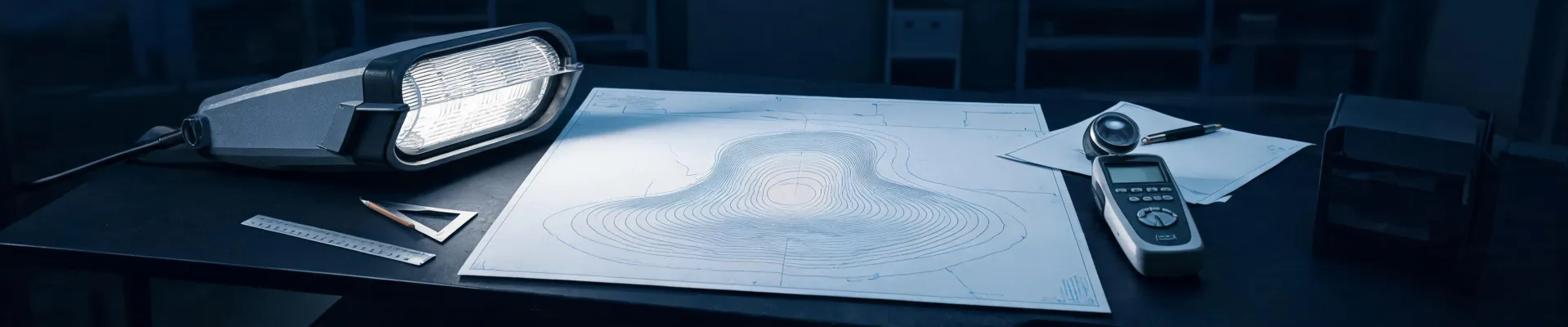
Request IES files for the exact fixture, not a family catalog. For sports lighting manufacturers, check beam angles, asymmetric optics, and BUG ratings. A fixture can hit 150 lm/W on the LED chip and still fail on the field because the driver, lens, and thermal design eat the output. The counterintuitive part: chip efficacy is not fixture efficacy.
2. Driver and thermal management
Ask who makes the driver, what surge protection is included, and how the fixture handles heat. LM-80 data tells you about LED lumen maintenance; TM-21 projects it. Without both, a lifetime claim is marketing. I wish I had tracked driver failures more carefully from the start. What I can say anecdotally is that driver quality separated the good suppliers from the frustrating ones.
3. Compliance and certifications
As of April 2026, I still see wholesale flood light listings that mix IP and IK claims without certificates. Check IP ratings against IEC 60529 and IK ratings against IEC 62262. For North America, look for UL 1598 or CSA C22.2; for Europe, CE and RoHS. Sports and area lighting may also reference EN 12464-2 for lighting of outdoor work places. Verify current requirements with your local authority—codes change.
4. OEM/private label and wholesale support
If you're a distributor, flood light wholesale is not only about unit price. Ask about MOQ, custom labeling, carton drop tests, spare parts, and lead time. A flood light supplier that supports OEM/private label should give you artwork templates, packaging specs, and a clear warranty process. That's often where Schreder-style outdoor lighting programs differentiate themselves: technical spec and compliance guidance, not just a catalog.
5. Total cost, not quoted price
Total cost of ownership includes base price, freight, duties, setup or tooling, rework, and warranty administration. As of Q1 2026, I've seen 100–200W LED flood light quotes from about $45 to $120 FOB per fixture depending on driver brand, IP rating, and MOQ. That's not a quote—just a directional range from three RFQs. The lowest quoted price often isn't the lowest total cost.
The old belief that still trips buyers
The 'brand name is enough' thinking comes from an era when metal halide fixtures had fewer electronics and fewer compliance variables. Today, the driver and controls are the long-term risk. I'm not saying legacy technology was bad. I'm saying the risk profile changed.
Where this advice breaks down
This worked for us, but we're a facilities buyer with predictable replacement cycles. If you're a distributor doing flood light wholesale for 20 customers, your calculus is different—you need channel pricing, OEM/private label support, and stock availability. I can only speak to domestic procurement. If you're dealing with international logistics, there are factors I'm not aware of.
I also can't tell you which specific Schreder outdoor lighting model is right for your field. I don't have photometric files for every project. If you're specifying a stadium or sports venue, get a lighting design with actual IES files. Don't rely on a catalog. And if you need same-day in-hand delivery, local stock may beat any overseas wholesale quote. Your mileage may vary.

Clara Whitmore is a lighting photometry and LED source analyst specializing in bulbs, tubes, strips, panels, and integrated luminaires. She interprets IES LM-79 measurements and TM-30 color rendition data through luminous flux, efficacy, intensity distribution, CCT, chromaticity, fidelity, and gamut metrics. She writes evidence-led comparisons for specifiers selecting source formats and luminaires for commercial interiors, industrial spaces, or horticultural systems where measured optical and color performance matter.